

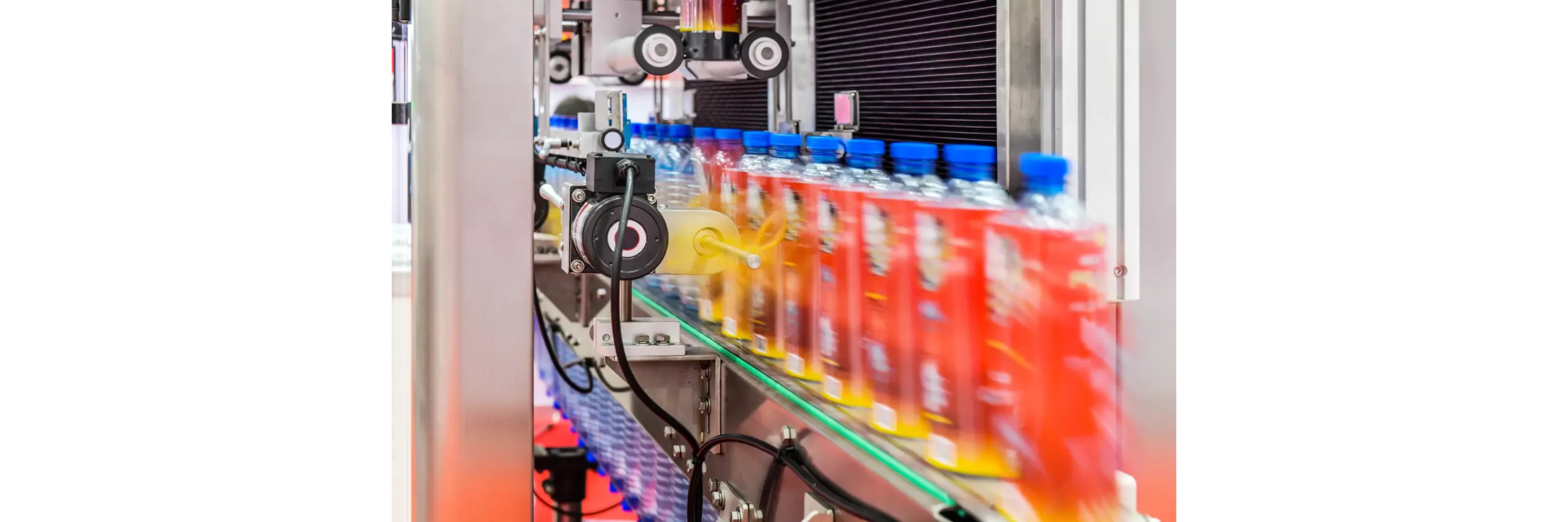
In the Beverage and Personal Care industries, label inspection remains one of the most demanding applications for automated quality control systems, particularly when dealing with transparent labels or labels that closely match the color of the container itself. Minimal contrast between the label and the packaging material, combined with reflective surfaces and the geometric complexity of bottles and containers, can significantly reduce inspection reliability unless the system is designed through a fully integrated approach where optics, lighting and software operate together in a coordinated way.
This article explains how Opto Engineering addresses these challenges through a complete machine vision ecosystem that includes high-resolution optics, specialized illumination systems designed to maximize label contrast, high-speed industrial cameras and configurable image analysis software. It also examines the specific requirements of both the Beverage and Personal Care sectors, highlighting the most effective system configurations for different inspection scenarios.
The discussion explores label inspection challenges in industrial machine vision applications and outlines how low-visibility labels on reflective or curved surfaces can affect inspection accuracy. From there, the focus shifts to the hardware and software technologies available from Opto Engineering for automation professionals and system integrators. Differences between Beverage and Personal Care applications are analyzed, together with lighting strategies, optical configurations and software functionalities designed to support reliable inspection performance on high-speed production lines.
Topics discussed in this article include:
- Why label inspection is difficult for machine vision systems
- The main label inspection requirements in the Beverage industry
- Label quality control challenges in the Personal Care sector
- Optical and lighting technologies used for transparent label inspection
- The role of software in automated label inspection systems
- Advantages of an integrated machine vision bundle for label quality control
Why label inspection is challenging for machine vision systems
Label detection and verification are among the most critical tasks in industrial machine vision applications.
Inspection complexity is strongly influenced by the level of contrast between the label and the underlying substrate. This contrast may depend on color differences or on physical surface characteristics such as opacity, gloss or texture. Additional complications arise from specular reflections generated by both the label and the container surface, which can introduce artifacts into the image. The three-dimensional geometry of bottles and containers — often curved, cylindrical or irregular — further increases inspection difficulty.
Two of the most problematic situations involve transparent labels, which allow light to pass through and therefore inherit the color and texture of the container beneath them, and labels made from materials or colors almost identical to the substrate itself. In these cases, generating sufficient visual contrast for reliable detection becomes especially difficult.
Real production environments amplify these issues even further. Beverage and Personal Care lines typically process glass or PET containers in multiple shapes and sizes at speeds reaching dozens or even hundreds of units per minute. Variations in label materials between production batches, humidity on container surfaces and mechanical vibration on the line can all negatively affect inspection consistency. As a result, label inspection systems must be robust, adaptable and precisely calibrated to maintain reliable detection rates while minimizing false rejects that could interrupt production.
Because Opto Engineering develops and manufactures every major component of a vision system — including optics, illuminators, cameras and software — the company is able to create integrated solutions where each component is engineered to work seamlessly with the others. This integrated bundle strategy forms the basis of its approach to label inspection in both Beverage and Personal Care applications.
Label inspection requirements in the Beverage industry
The Beverage industry is defined by extremely high production throughput, fast-moving lines and a wide range of packaging formats, including glass bottles, PET containers, cans and composite-material packaging. In this environment, label inspection must go far beyond simple presence detection.
Typical inspection tasks on Beverage production lines include:
- Verification of label presence or absence
- Checking label alignment, including horizontal positioning and height
- Inspection of physical defects such as wrinkles, tears, bubbles or missing sections
- OCR-based reading of batch codes and production data
- Detection of double-label conditions where two labels are accidentally applied on the same container
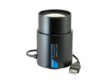
Since cylindrical containers dominate Beverage packaging, many inspection systems must analyze the entire lateral surface of the product. One highly effective solution involves the use of pericentric lenses, which can capture a complete 360° view of the container in a single image acquisition. This eliminates the need for more complex multi-camera architectures, reducing both system footprint and integration complexity.
Production speed also creates strict exposure-time requirements. Images must be acquired quickly enough to freeze motion and avoid blur on fast-moving containers. By using strobed illumination systems equipped with integrated drivers or paired with dedicated controllers such as the LTDV series, exposure times can be reduced dramatically while still producing sharp, high-quality images at elevated line speeds.
Label quality control in the Personal Care sector
The Personal Care industry — including products such as shampoos, creams, detergents, toothpaste and cosmetics — shares several inspection challenges with the Beverage sector while introducing additional complexities of its own. Containers are frequently made from opaque or semi-transparent plastics with curved and highly variable shapes. Labels are often transparent or partially transparent and must conform perfectly to the packaging surface without wrinkles or distortion.
One major challenge in Personal Care manufacturing is the high level of format variability. Production lines may process dozens of product variants, each with different bottle geometries, dimensions and label types. Consequently, inspection systems must support rapid reconfiguration and fast format changeovers with minimal downtime.
In these environments, machine vision software becomes particularly important because operators need the ability to adjust inspection parameters quickly without requiring major system modifications or advanced programming intervention.
Optical and lighting technologies for transparent label inspection
Designing an effective machine vision system for label inspection requires careful integration of optics, lighting, cameras and image analysis software. Every component must be selected according to the specific application requirements while maintaining full compatibility across the system.
Optics: from fixed focal length lenses to pericentric systems
Optics represent the foundation of any industrial label inspection system. For standard applications involving label presence detection or positioning control on relatively flat surfaces, fixed focal length lenses and macro lenses are widely used.
Fixed focal length lenses provide flexibility in focal length selection, field of view, working distance and aperture adjustment for brightness and depth of field optimization. Macro lenses are especially suitable for high-resolution inspection of small details because they offer minimal distortion and high optical performance across multiple wavelengths.
For applications requiring full 360° inspection of cylindrical containers, pericentric lenses provide simultaneous imaging of the side and top surfaces of the product, significantly simplifying the hardware architecture.
Lighting: a key factor in label visibility
Within automated label inspection, lighting is often the single most critical factor affecting system performance. Depending on the application, image contrast may be generated through transmission, color differentiation or controlled reflections.
Some of the main lighting configurations used by Opto Engineering include:
- High-power ring lights, particularly effective when paired with 360° optics. By adjusting illumination angle and positioning, these systems can enhance edges and surface features while minimizing unwanted reflections.
- RGB LED bar lights, commonly used in applications based on color contrast, such as distinguishing labels from differently colored backgrounds or detecting print defects on colored labels. These systems also provide considerable flexibility in positioning and orientation.
Cameras designed for high-speed inspection
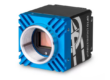
Image quality depends heavily on camera and sensor performance. For Beverage and Personal Care applications, the ITALA camera series from Opto Engineering combines high-resolution Sony sensors with global shutter technology and GigE Vision connectivity to deliver reliable industrial imaging performance.
ITALA cameras are optimized for high-speed inline inspection and include advanced features such as:
- Sequencer functionality for dynamic management of multiple acquisition settings
- Image compression to optimize bandwidth and storage efficiency
- Chunk Data support for structured metadata association and traceability
For industrial integration, the ITALA platform also supports encoder synchronization and communication protocols including Modbus and RS232/RS485, enabling seamless interaction with PLCs and automation systems.
The cameras additionally provide four optoisolated outputs and two inputs, allowing direct illuminator control and secure handling of trigger and feedback signals.
For color-sensitive inspection tasks, the integrated Color Correction Matrix ensures consistent and repeatable color reproduction, which is essential for packaging and label quality verification.
The role of software in automated label inspection
Software is one of the core elements of any industrial vision system intended for label inspection. Even the most advanced algorithms depend on high-quality image acquisition supported by optimized optics, controlled illumination and reliable cameras.
A robust software platform must accurately detect label presence, positioning and integrity while remaining resilient against environmental changes and variations in product appearance. It must also provide integrated communication with machine devices and offer an intuitive user interface for operators during product or format changes.
To address these requirements, Opto Engineering developed OEVIS, a no-code software environment for industrial machine vision application development. OEVIS combines both development and runtime functionalities within a single platform and is designed for system integrators, automation engineers and machine vision specialists.
Key functionalities for label inspection applications include:
- Synchronous and asynchronous multi-camera acquisition management
- Parallel image processing through multi-threading
- Support for industrial communication protocols such as Modbus, Ethernet/IP and OPC UA
- Configurable operator interfaces for rapid parameter adjustment and format management
From an algorithmic perspective, label inspection remains challenging because of the wide range of inspection conditions and the variability of reflections and environmental influences. Reliable software must therefore support a broad set of image processing tools as well as machine learning and deep learning algorithms when needed.
The no-code architecture of OEVIS enables developers to quickly test and validate processing strategies while directly visualizing results and optimizing parameters. A major advantage of the platform is the ability to manage image analysis, device communication and interface configuration inside a single software environment.
In addition, OEVIS allows conventional image processing algorithms to be combined with machine learning and deep learning approaches, while still giving developers full flexibility to write or import custom code where required.
The advantages of an integrated bundle approach
One of the major differences between a machine vision system assembled from components supplied by multiple vendors and a fully integrated bundle lies in overall consistency, integration simplicity and long-term maintainability.
Opto Engineering positions itself as The Machine Vision Company®, offering a complete portfolio of optics, cameras, illuminators and software developed within a single ecosystem. This integrated approach provides several important benefits for automation professionals and system integrators working on label inspection projects.
First, compatibility between components is ensured from the design stage. Optics are engineered with full knowledge of camera sensor characteristics, while illumination systems are developed according to optical geometry and acquisition requirements. This significantly reduces setup and optimization time while minimizing unexpected integration issues.
Second, technical support is centralized. Application Engineers can analyze the complete system — including optics, lighting, cameras and software — and provide coordinated solutions without responsibility being divided between multiple suppliers.
In practical terms, machine vision systems built with Opto Engineering components are used across a wide variety of production environments, including:
- High-speed Beverage bottling lines requiring continuous inline inspection
- Personal Care production lines with frequent format changes
- Pharmaceutical applications combining label verification with OCR traceability
- Harsh industrial environments where ITALA IP cameras provide enhanced protection against moisture and contaminants
Conclusion
Label inspection in the Beverage and Personal Care industries requires specialized expertise and carefully selected machine vision components. Transparent labels in particular present inspection challenges that cannot be solved by optimizing a single system element in isolation. Reliable performance depends on the coordinated integration of high-resolution optics, industrial cameras, advanced lighting systems and robust image analysis software.
Opto Engineering offers a comprehensive portfolio covering all of these requirements, from pericentric lenses for 360° container inspection to industrial cameras, strobed illumination systems and OEVIS software for rapid no-code development of vision applications.
The result is a reliable label inspection solution capable of operating effectively under real production conditions while maintaining consistent and traceable quality control across the entire manufacturing line.
By combining preliminary feasibility studies, specialized technical support and guaranteed compatibility across the entire vision ecosystem, Opto Engineering provides a strong reference solution for companies designing or optimizing label inspection systems in the Beverage and Personal Care sectors.